i-doit: Track Company Property
With the i-doit integration, you can list which pieces of your company’s property are related to any given ticket. That includes both physical and digital infrastructure, from servers to meeting rooms to virtual machines to software licenses.
This feature is optional. If you don’t see it in the ticket view, that means your administrator hasn’t enabled it yet. Administrators can learn more in the i-doit integration in the admin documentation. If your company is using i-doit, ask your administrator / IT personnel to give you a tour. If your organization isn’t already using i-doit, this guide is not for you.
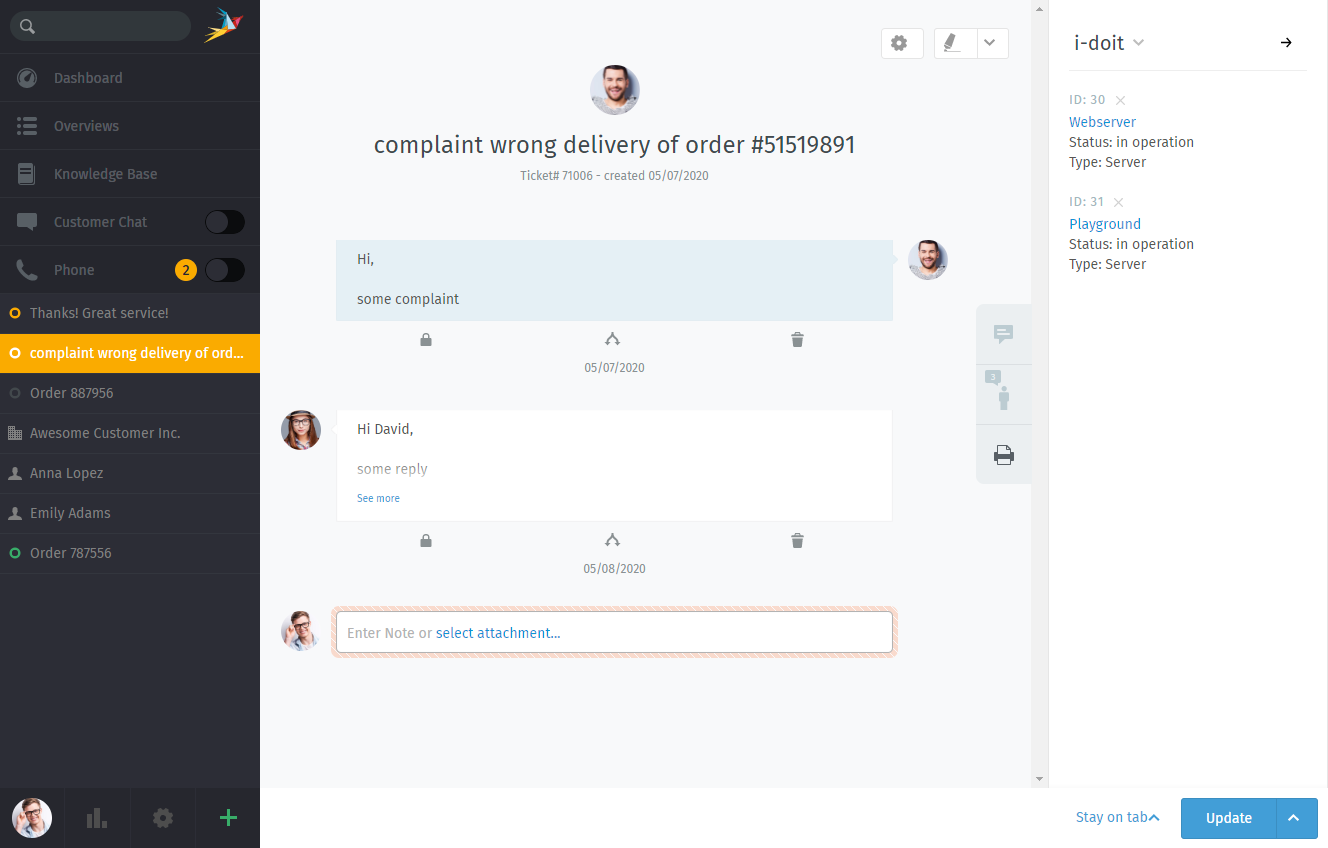
Use the 🖨 printer tab to view or manage a ticket’s assets from i-doit.
Neden?
i-doit, zahmetli ekipmanı takip etmenize ve en son bir şeyler ters gittiğinde önceki biletleri bulmanıza yardımcı olabilir.
It’s also a great way to document quirks in the company’s belongings: Why haven’t we upgraded this system from Windows Vista yet? What did we decide to do about that faulty network switch? And why does the coffee maker keep shutting off before it’s finished? 🤬
Nasıl Çalışır?
In Zammad: Link i-doit Assets To Tickets
First, add i-doit assets to a ticket in the ticket sidebar:
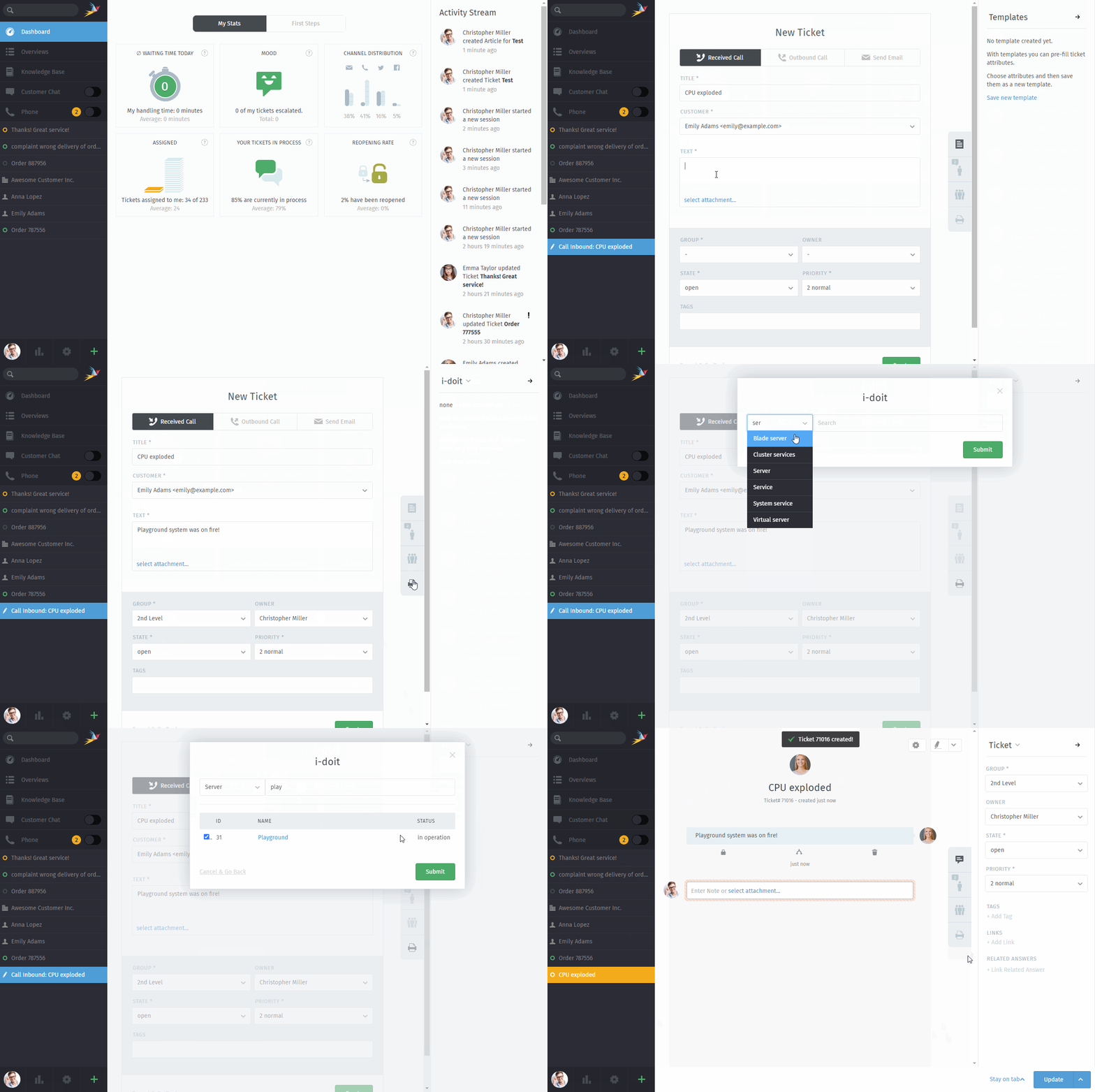
Select 🖨 > i-doit > Change Objects, then filter by category and/or name.
Varlıklar bir bilete bağlandıktan sonra, bunlara doğrudan bilet görünümünden erişilebilir:

Click on a linked asset in the ticket sidebar to open its page in i-doit.
In i-doit: List & Create Tickets For a Given Asset
i-doit kontrol paneliniz, her bir varlıkla ilişkili tüm biletlerin bir listesini içermelidir:

Click the 💬 in the toolbar to list an asset’s tickets. Use the 🔗 Open in ticket system button to open the ticket in Zammad.
You can even launch Zammad’s new ticket dialog directly from i-doit, with the asset already linked for you:
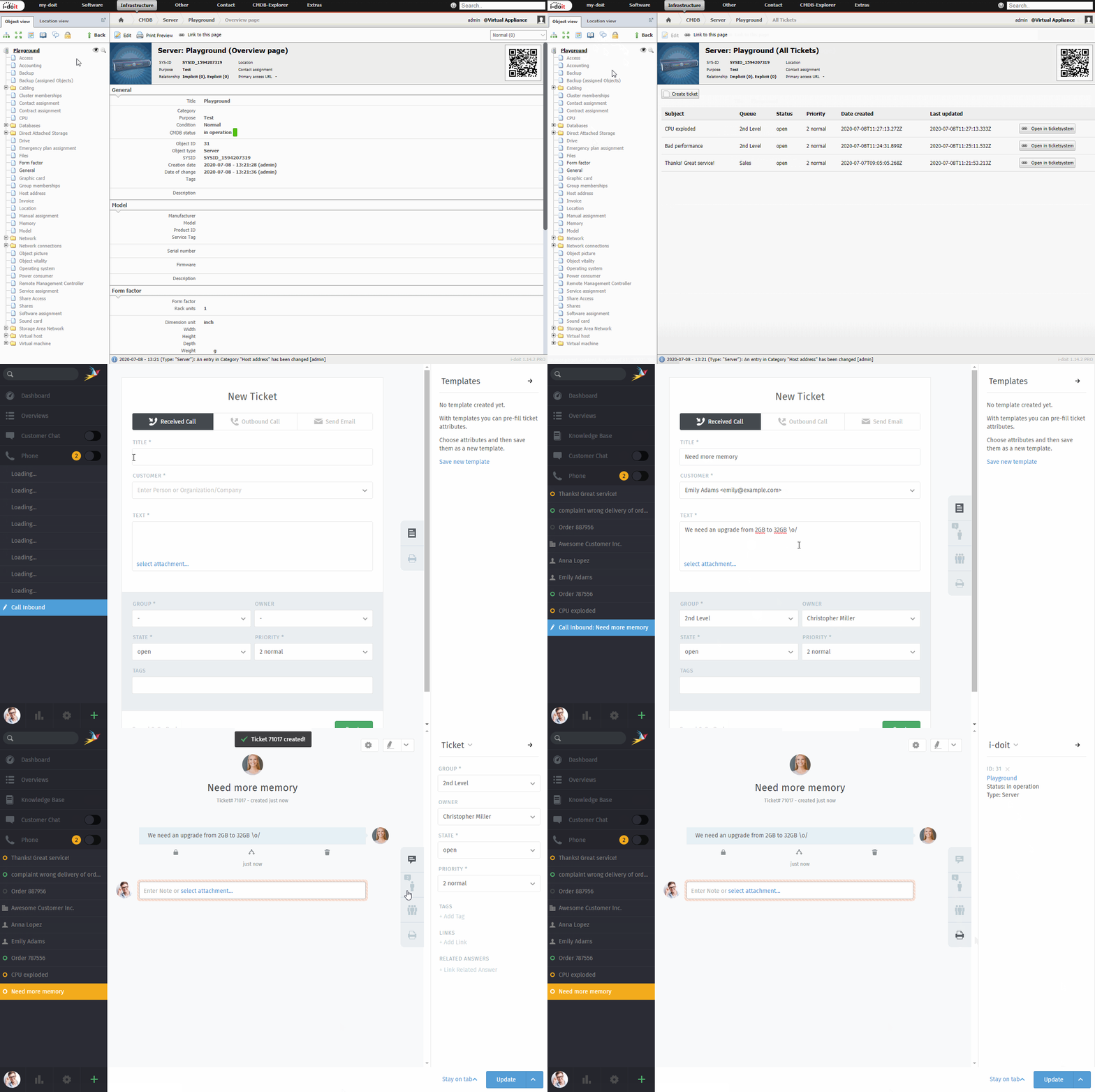
Yeni, önceden bağlanmış bir bilet iletişim kutusu başlatmak için varlık bilet listesindeki 📄 Bilet oluştur butonunu kullanın.